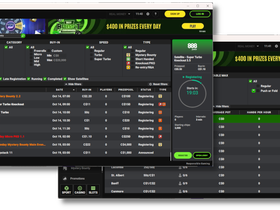


On July 13, Alberta followed Ontario in launching Canada’s second regulated competitive online gambling market.
Around two dozen operators went live on Monday, including major brands such as FanDuel, BetMGM, BetRivers and DraftKings, offering online casino games, sports betting and other regulated products.
One product was noticeably absent: peer-to-peer online poker. Although online poker in Alberta is fully permitted under the new regulations, not a single operator launched a regulated poker offering.
That outcome came as little surprise. In our recent explainer, pokerfuse noted that a day-one poker launch was highly unlikely, and that’s exactly how events have unfolded.
Why No Regulated Poker on Day 1?
The reason is simple: Alberta’s regulated online poker market is currently ring-fenced.
Under the province’s rules, any regulated poker operator can initially offer games only between players physically located in Alberta. There is no shared liquidity with Ontario or international player pools.
Ontario launched under the same model in 2022, but the economics are very different.
Ontario’s regulated market serves a population of more than 16 million people. Alberta has just over five million residents. For a game that depends on player liquidity to support healthy cash-game traffic and tournament guarantees, a standalone Alberta network is a much harder business proposition. That is why operators have launched casino and sportsbook products but not online poker, as those verticals do not rely on player liquidity.
Fortunately, Alberta-only player pools are not expected to be the long-term plan.
As Poker Industry PRO previously reported, Alberta and Ontario are already working on an agreement that would allow regulated operators to combine player pools for online poker and daily fantasy sports.
Exactly when these two provinces will begin sharing player pools remains unclear. No timeline has been announced by the Alberta regulator, and it could still be several months before an agreement is finalized.
Three-Month Transition Period
In the meantime, Alberta players are not losing access to online poker.
Rather than launching ring-fenced regulated poker rooms, many operators are continuing to serve Albertans through their existing international dot-com platforms, giving players the same access to global player pools they had before the regulated market launched.
PokerStars, 888poker, PartyPoker and many operators on the iPoker Network are all continuing to serve Alberta players. However, as was the case in Ontario, this arrangement is expected to be temporary.
Alberta regulators have confirmed that operators participating in the licensing process may request a transition extension through October 13, provided they demonstrate a clear pathway to compliance. The operators mentioned above are all registered with Alberta regulators, allowing them to take advantage of that transition framework while completing their move into the regulated market.
GGPoker, however, has yet to register with Alberta regulators and, as things stand, cannot make use of the transition period. Although the operator appears to have ceased serving the province, some Alberta players have reported that they are still able to play on the site.
Online Poker Rooms in Alberta and Expectations
| Operator | Alberta License | Expected Strategy |
|---|---|---|
| GGPoker | ❌ | Might return once ON + AB shared liquidity or international pool |
| PokerStars | ❌ (✅ FanDuel) | Confirmed open during three-month window; then FanDuel transition expected. |
| Bet365 (iPoker) | ✅ | Probably will close poker. |
| WPT Global | ❌ | Not clear. |
| 888poker | ✅ | Confirmed open during three-month window; then launch once shared liquidity happens. |
| PartyPoker | ✅ | Confirmed open during three-month window; then launch once shared liquidity happens. |
So what happens after the transition period ends?
The expectation is that Alberta and Ontario will have reached a shared liquidity agreement by then, allowing operators to combine their player pools instead of launching standalone Alberta networks. If no agreement is in place, operators will likely face a choice between launching Alberta-only poker rooms or discontinuing service through their international dot-com platforms.
The International Liquidity Question
There is also a longer-term possibility: the return of international player pools.
Today, Alberta players continue to compete against players from around the world through offshore platforms. Whether regulated operators will eventually be allowed to offer that same experience is not a question of technology or commercial viability; it is a question of Canadian law.
The issue is whether provinces can permit international peer-to-peer poker without violating the federal Criminal Code.
Last year, the Ontario Court of Appeal ruled that international player pooling can be lawful, provided that gaming be “conducted and managed” by the province. The decision was viewed as a major win for the online poker industry because it removed what many considered the biggest legal obstacle to reconnecting regulated Canadian markets with global player pools.
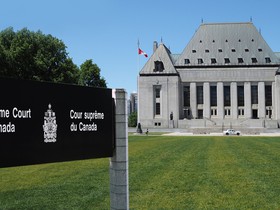
However, the ruling has since been appealed to the Supreme Court of Canada, with a hearing now scheduled for October 7, 2026.
Until that case is resolved, Alberta is taking a cautious approach. Asked by Poker Industry PRO about international player pooling, the Alberta regulator said it is still assessing the Ontario Court of Appeal’s decision.
“No determination has been made at this time regarding the permissibility of peer-to-peer games involving players located outside of Canada,” Alberta Gaming, Liquor and Cannabis (AGLC) told PRO.
The regulator added that any future policy would depend on “a detailed evaluation of legal authority, regulatory oversight, operational controls and player-protection requirements.”
The next step for Alberta is likely to be shared liquidity with Ontario. Reintroducing international player pools remains a longer-term possibility, but one that will probably have to wait until the Supreme Court of Canada has ruled on the case.