

A new gambling regime could create serious problems for online poker in Ireland, but fixing them may not require lawmakers to change the country’s new gambling legislation at all.
Instead, the Gambling Regulatory Authority of Ireland (GRAI) already appears to have the power to treat poker differently from other forms of online gaming. The bigger question is whether the regulator will turn its attention to poker before the new rules begin affecting the market.
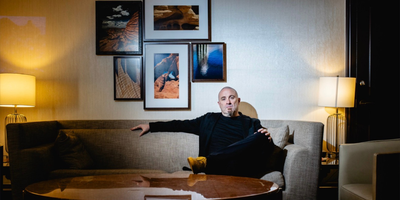 “This isn’t primarily a legislative problem, it is an implementation problem,” David Lyons, a veteran online gaming executive and former PokerStars and Global Poker executive who currently serves as Non-Executive Director, Ireland at SolutionsHub, told Poker Industry PRO in an exclusive.
Lyons recently made a submission to the GRAI in his personal capacity as an Irish poker enthusiast, raising concerns about how the country’s new regulatory framework could affect the game.
As previously reported by pokerfuse, Ireland’s Gambling Regulation Act 2024 sets a maximum stake of €10 and maximum winnings of €3,000 for a “relevant game.” If those limits are applied directly to online poker, they could have major implications for cash games and tournaments offered to players in Ireland.
This isn’t primarily a legislative problem, it is an implementation problem.
But the legislation also gives the regulator considerable room to act. Section 83 allows the GRAI, with the consent of the Minister, to vary the maximum stake, maximum winnings, or both.
“The real question isn’t legal power,” Lyons said. “It’s regulatory bandwidth and appetite.”
Poker May Have to Wait Its Turn
The GRAI has only recently begun the first phase of licensing under Ireland’s new regulatory system. Gaming licences, which would ultimately encompass relevant games such as online poker, are still to come.
As part of the process of putting the new regime in place, the authority also held a public consultation on its proposed regulatory framework, which closed on August 20.
The real question isn’t legal power. It’s regulatory bandwidth and appetite.
Lyons submitted his views as part of that consultation but has not yet received a response from the GRAI — something he said he is not surprised by.
“Realistically, the GRAI has only just opened its doors for the first phase of licensing (remote betting). Gaming licences, the category that would actually capture online poker as a 'relevant game’, aren’t due to open until 2027 at the earliest.”
“So a response specifically addressing poker’s stake and prize treatment sits well behind the queue of far bigger, more urgent work: betting, in-person licensing, the National Gambling Exclusion Register, advertising rules, etc.”
Online poker, in other words, is just one part of a much larger regulatory overhaul.
“While the poker community is passionate and tight-knit they are not the priority for the regulator, who undoubtedly see they have far bigger issues to address across the broader industry,” Lyons said.
“It is a tough public sell to push the interests of poker players when the Authority is also trying to stand up an entire licensing regime, a national self-exclusion register, and advertising controls from scratch.”
Lyons therefore doesn’t expect much poker-specific clarity until the regulator turns its attention to gaming licences.
“My honest expectation is that we won’t see anything poker-specific until the gaming licence category itself opens and that’s assuming poker gets called out at all rather than folded quietly into the general 'relevant games’ bucket.”
Poker and Casino Games Are “Fundamentally Different Economic Animals”
Casino games and poker are fundamentally different economic animals. One is you-versus-the-house, the other is you-versus-the-table.
At the heart of Lyons’ argument is a fundamental difference between online poker and traditional house-banked casino games.
So far, he believes Ireland’s approach looks more like a general gambling framework being applied to poker than one designed around the game’s particular characteristics.
“The Act’s default mechanism doesn’t actually distinguish game structure at all; a 'relevant game’ gets the same stake and maximum-winnings schedule whether it’s a house-banked slot, where the operator sets the house edge, or a peer-to-peer poker table, where the operator’s only economic interest is the rake.”
“That’s the crux of it: casino games and poker are fundamentally different economic animals. One is you-versus-the-house, the other is you-versus-the-table, and a single blanket schedule can’t sensibly serve both.”
The Act nevertheless gives the regulator room to recognize that distinction.
“The good news is that the door isn’t fully closed, because the Act itself gives the Authority room to vary those numbers by game type once it turns its attention to it. It’s just not been the priority yet.”
Could Ireland Repeat Mistakes Made Elsewhere?
Lyons expects the regulator will eventually recognize the differences between poker and casino games. His concern is whether that happens soon enough.
“Ultimately, I think they will get to it. But will that be in time for the licensing regime on day 1? I don’t think so, sadly.”
 He pointed to previous regulatory experiences elsewhere in Europe as a warning.
“I fear an Italy or Greece-like situation, where regulations designed with one type of game in mind end up damaging the experience for another before anyone corrects the course.”
“Both jurisdictions, at different points, applied frameworks that weren’t built with poker’s particular liquidity needs in mind, and in both cases it took years before the regime settled into something workable for poker specifically.”
Other European markets demonstrate that poker can be treated differently. Lyons pointed to the UK, where fixed stake and prize tables apply to gaming machines rather than peer-to-peer poker.
“The UK is the cleanest example close to home — its fixed stake and prize tables exist for gaming machines, not for peer-to-peer poker, which is instead controlled through licence conditions: age verification, KYC, safer-gambling tools, rather than a stake / prize grid copied from a slot machine.”
He also pointed to the experience of nationally segregated European poker markets and the eventual move toward shared liquidity between France, Spain, Portugal and Italy.
“That’s the real lesson for Ireland: the regulatory lever that actually matters for poker is liquidity policy, not a stake cap lifted from a slots schedule.”
Will International Operators Stay in Ireland?
Despite the uncertainty, Lyons believes major international poker operators can — and will — offer compliant products in Ireland.
“Yes, I believe they could. And I frankly believe that they will.”
There are already signs that at least some major operators see a viable path into the Irish market. GGPoker, for instance, earlier this year expressed interest in obtaining a license in Ireland and is the only major online poker operator to have publicly confirmed that it intends to pursue one. While the current regulatory framework appears unfavorable to online poker, that interest could also suggest that the GRAI may refine or adapt the rules as the licensing framework develops.
One reason Lyons believes operators will remain interested is poker’s long-established place in Irish gambling culture.
“Ireland has a genuine, decades-deep poker culture to draw on here.”
Make the regulated product worse than the offshore alternative, and players will simply vote with their feet.
The Irish Poker Open dates back to 1980 and has grown into one of Europe’s best-known live poker festivals. Lyons played in the event himself before the online poker era and before major operator sponsorship became part of the festival.
“That’s not a niche subculture, that’s a mainstream Irish institution with a real media footprint.”
Nor does Lyons see the technical challenge of creating an Ireland-specific product as the major obstacle.
“Geofencing and market-specific configuration is also, frankly, something the bigger networks already do routinely for other ring-fenced or specially-regulated markets; the technical lift of building an Ireland-compliant table structure is the easy part.”
Instead, the question is whether the restrictions leave operators with a product worth offering.
“The choice for operators will simply be whether the regulated economics work well enough to bother, not whether they’re capable of building it.”
The Risk of Driving Players Offshore
That question becomes particularly important if complying with Ireland’s rules leaves licensed operators unable to offer the games players want.
Lyons said two things tend to break the regulated poker experience in practice: liquidity and cost.
France provides one example. Its online poker market was initially restricted to a domestic player pool before France, Spain, Portugal and Italy ultimately moved toward shared liquidity.
Australia offers a more extreme example. Its 2017 amendment to the Interactive Gambling Act effectively removed real-money online poker from the regulated market, leaving players without a licensed domestic alternative.
“Australia is the harder version of the same story: its 2017 amendment to the Interactive Gambling Act banned real-money online poker outright, with no licensed local alternative left standing,” Lyons said.
For Ireland, Lyons believes the broader lesson is clear.
“Ireland doesn’t need a poker-specific precedent to see the pattern: make the regulated product worse than the offshore alternative, and players will simply vote with their feet.”
Some Regulatory “Friction” Is Worth Having
Lyons’ concerns about the stake and prize limits don’t amount to opposition to tighter regulation of online poker.
In fact, he believes several elements of Ireland’s new framework could meaningfully improve player protection.
The regulatory lever that actually matters for poker is liquidity policy, not a stake cap lifted from a slots schedule.
“The single National Gambling Exclusion Register is a real win for poker specifically: a live, cross-operator self-exclusion list catches a player in trouble far faster than any one site’s own tools ever could.”
He also pointed to tighter KYC, anti-money laundering and source-of-funds requirements.
“Yes, it’s more friction at sign-up, but it also makes it a lot harder for a cash table to be funded by dirty money, for multi-accounting or bots to slip through, or for collusion to launder chips between accounts.”
Fit-and-proper testing of operators and requirements surrounding player funds could provide further protections.
“None of that is exciting, and some of it will feel like extra hoops. But every one of those hoops is either protecting you from whoever is sitting across the felt from you, or protecting your money from the house itself.”
“That’s friction worth having.”
A “Prove You’re Safe” Alternative to Flat Limits
Rather than simply removing limits for poker, Lyons believes Ireland could take a more targeted approach that protects vulnerable players while allowing others to access higher-stakes games.
“One possible approach is this: it is good to have stake and prize limits, but when players prove themselves willing and able to play above the standard limits, that should (carefully) be permitted.”
His proposal would create graduated levels of access. Players could qualify for higher limits based on factors including deposit and playing history, affordability and source-of-funds checks, responsible gambling behavior, and exclusion-register status.
“You earn the right to cross the velvet rope through demonstrating that you are not a risk to yourself, to others, or to the integrity of the game.”
Lyons stressed that the test should be based on behavior rather than whether someone identifies as a recreational or professional poker player.
“To be clear, the qualifying test should be behavioural and evidence-based rather than a status marker – the same standard should apply whether someone is a recreational player or a professional.”
The concept borrows from enhanced due diligence already used for higher-spending customers in other regulated gambling markets, but with a different objective.
“Flip the incentive so it’s protection-led rather than retention-led – the bar is 'prove you’re safe’, not 'prove you’re valuable’.”
Lyons believes that approach could maintain a low default limit for players who need greater protection without unnecessarily eliminating the higher-stakes cash games and tournament guarantees needed to sustain a viable poker ecosystem.
Ireland’s Online Poker Market Could Go in Two Very Different Directions
Flip the incentive so it’s protection-led rather than retention-led – the bar is 'prove you’re safe’, not 'prove you’re valuable’.
With gaming licensing still to come, exactly what regulated online poker in Ireland will ultimately look like remains uncertain.
Lyons sees two dramatically different possibilities.
“Either it’ll be fine (poker operators given a moratorium while the details are worked out), or it will be very bad (operators bringing the shutters down to hard-comply with the law, and poker forums filling up with people looking for the easiest way to play the bigger games offshore).”
In the better scenario, the GRAI could signal that peer-to-peer poker will receive bespoke treatment before the existing limits take full effect, allowing operators to continue offering meaningful cash games and tournament guarantees while a permanent framework is developed.
The alternative would see operators apply the €10 and €3,000 limits literally from the outset.
“The 'bad’ path looks like operators applying the €10/€3,000 numbers literally from day one to stay compliant: buy-ins capped, guarantees cut, cash game stakes squeezed down to a size no serious or professional player will sit at, liquidity collapsing within weeks, and the community doing what it always does when the regulated product stops working, moving the conversation to Telegram groups and forums, and the money to whichever offshore skin still deals a proper game.”
But Lyons doesn’t expect either scenario to play out quite so cleanly.
“My honest money is on something messier than either extreme: a slow, semi-official period of forbearance while the Authority works out what it actually wants poker to look like, with the serious end of the community not waiting around for that clarity.”