
Last updated: February 12, 2026
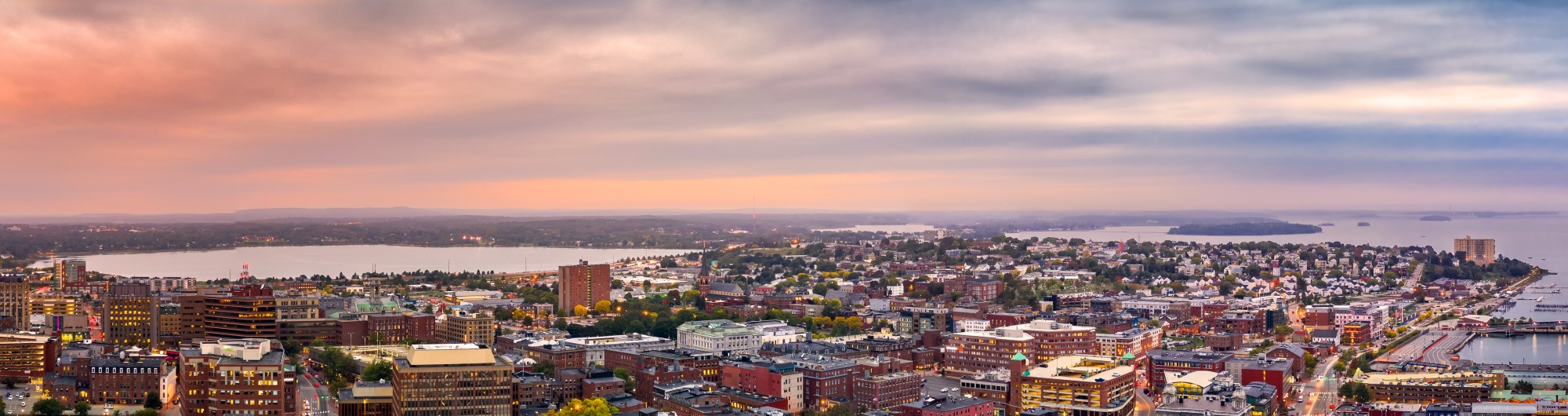

Online poker became legal in Maine in January 2026 after Governor Janet Mills allowed LD 1164 — the state’s iGaming bill — to become law without her signature. The move made Maine the ninth US state to legalize online poker, joining Nevada, New Jersey, Delaware, Pennsylvania, Michigan, West Virginia, Connecticut, and Rhode Island. The development marked a significant expansion of regulated online gaming in the Northeast and added another jurisdiction to the rapidly evolving US online poker landscape.
LD 1164 authorizes statewide online casino gaming and online poker under an exclusive tribal licensing structure. The law grants each of the four Wabanaki Nations one iGaming license, giving the tribes control over which commercial operators may enter the market. However, legalization does not mean players can sign up and start playing immediately. Before real‑money online poker can launch, the Maine Gambling Control Unit must finalize a comprehensive regulatory framework covering licensing standards, technical certification, responsible gaming safeguards, geolocation enforcement, anti‑money laundering controls, tax reporting requirements, and strict player‑fund protection rules.
Only after those regulations are formally adopted and licenses are issued will operators such as BetRivers Poker, WSOP Online, or BetMGM Poker be eligible to apply and seek approval to launch in the state.
As of early 2026, online poker in Maine is legal but not yet live. There is currently no confirmed launch date. The timeline will depend on how quickly regulators complete rulemaking, how tribal partnership agreements are structured, and how long platform testing and certification take once applications open.
This guide explains everything Maine players need to know — including the legalization timeline, how the tribal licensing model works, which operators are most likely to pursue partnerships, whether Maine could join the Multi‑State Internet Gaming Agreement (MSIGA), and what safe alternatives exist while the state completes its regulatory process.
Can I Play Online Poker in Maine?
While online poker is now legal in Maine, you cannot play it just yet. The reason is straightforward: no licensed online poker operator has launched in the state.
LD 1164 created the legal pathway for real‑money online poker, but it did not authorize immediate operations. Before any platform can accept deposits or host games, the Maine Gambling Control Unit must finalize regulations and open the licensing process. Until that happens, there are no regulated Maine online poker sites and no approved real‑money poker apps available to players.
Under the terms of the new iGaming law, each of Maine’s four Wabanaki Nations will receive one statewide iGaming license. Those licenses allow the tribes to partner with commercial gaming operators to offer online casino and poker products across the state. However, the specific partnerships have not yet been formally announced, and no operator applications have been approved as of early 2026.
Importantly, LD 1164 establishes a tribal‑exclusive model. Maine’s two commercial casinos were not included in the legislation and will not independently operate online poker. Instead, all internet gaming activity will fall under the oversight of the Maine Gambling Control Unit, while the Maine Gambling Control Board will continue regulating retail casino operations.
As of early 2026:
- ✅ Online poker is legal in Maine
- ❌ No regulated real‑money poker platforms are live
- ❌ No official launch date has been confirmed
Until the regulatory framework is finalized and licenses are issued, Maine players will need to wait before they can access a legal, state‑regulated online poker room.
What About Sweepstakes Poker in Maine?
On June 9, 2025 — just days before LD 1164 was passed — the Maine Gambling Control Unit issued a public statement classifying sweepstakes-style casino and sweepstakes poker platforms as unlicensed and illegal online gambling operations under state law.
The warning prompted a response from the Social and Promotional Games Association (SPGA), which reiterated its position that sweepstakes platforms operate within the framework of US sweepstakes law and therefore do not constitute traditional gambling.
The disagreement reflects a broader national debate. In recent months, several states have taken enforcement action against sweepstakes operators, and some platforms have exited certain jurisdictions altogether. Regulators in multiple states have signaled increased scrutiny of sweepstakes models, particularly where real-money equivalents are involved.
In Maine, however, no formal enforcement action has yet resulted in a blanket shutdown of sweepstakes poker platforms. Some continue to operate, but their legal status remains disputed and subject to potential regulatory or legislative changes.
Now that Maine has established a regulated iGaming framework under LD 1164, the state’s long-term posture toward sweepstakes platforms may evolve. Players should understand that sweepstakes poker in Maine operates in a legally uncertain environment and does not offer the same consumer protections as a fully licensed, state-regulated online poker room.
Projected Online Poker Operators to Watch
Now that iGaming is legal in Maine, attention turns to which operators will ultimately partner with the Wabanaki Nations and pursue one of the four available licenses. Because LD 1164 establishes an exclusive tribal model, entry into the market will depend entirely on securing a partnership with one of the four tribes.
It is also not guaranteed that every licensed operator will immediately launch online poker. While online casino products are typically easier to deploy in smaller states, online poker depends heavily on liquidity — the number of active players at any given time.
Maine’s population of approximately 1.4 million presents a structural challenge. On its own, the state may struggle to support a vibrant, standalone poker ecosystem with large tournament guarantees and diverse cash game traffic. For that reason, some operators may wait to see whether Maine joins the Multi-State Internet Gaming Agreement (MSIGA) before committing to a poker rollout.
With only four iGaming licenses available and multiple national brands competing for entry, the licensing landscape will likely be competitive. Based on existing partnerships, strategic positioning, and performance within the broader US online poker market, the following operators appear among the most logical candidates to launch in Maine.
Caesars and WSOP Maine: Partnership and Potential Launch
Caesars appears structurally well positioned. The company already maintains relationships with the Passamaquoddy, Penobscot, Maliseet, and Mi’kmaq tribes through its sports betting operations in Maine.
Caesars operates WSOP Online, one of the largest shared-liquidity poker networks in the US. WSOP Online is currently active in Nevada, Michigan, Pennsylvania, and New Jersey, and participates in multi-state liquidity arrangements across several of those jurisdictions.
If Maine joins MSIGA, Caesars would be able to integrate Maine players into its existing network. That would significantly improve liquidity and make a Maine poker launch more economically viable.
However, there are factors that complicate the picture:
- WSOP Online has not launched in West Virginia despite that state joining MSIGA
- The WSOP brand was recently acquired by the parent company of GGPoker
- Licensing and brand agreements may affect expansion priorities
Even with those considerations, Caesars’ existing tribal partnerships and multi-state poker infrastructure make it one of the strongest potential launch candidates.
BetRivers Poker in Maine: RSI’s Expansion and Licensing Challenges
Rush Street Interactive (RSI) has aggressively expanded BetRivers Poker, building one of the most rapidly growing regulated poker networks in the country.
BetRivers Poker launched across multiple states within a short period, creating a competitive shared-liquidity environment in Michigan, Pennsylvania, Delaware, and West Virginia.
RSI has demonstrated particular interest in entering smaller or emerging markets:
- It was the first operator to launch online poker in West Virginia
- It played a central role in bringing regulated poker back to Delaware
That track record suggests Maine could fit RSI’s expansion model. However, competition for one of the four tribal licenses is expected to be significant.
While no licenses have been formally allocated, several operators already have strong relationships in the state through sports betting or online casino operations. RSI will need to secure a tribal partnership before pursuing a launch.
If BetRivers secures a license and Maine joins MSIGA, it could quickly connect Maine players to its existing multi-state network.
FanDuel Poker Maine: A Potential Online Poker Launch
FanDuel publicly opposed elements of LD 1164 during the legislative process, arguing that the structure limited commercial flexibility. Now that legalization has occurred, however, FanDuel remains a plausible licensing contender.
FanDuel does not currently operate a standalone poker platform in the US. However, it is part of Flutter Entertainment, which owns and operates PokerStars US.
Industry observers have speculated that Flutter could eventually consolidate US poker operations under the FanDuel brand. If such a strategy materializes, a FanDuel Poker Maine platform could leverage PokerStars’ existing technology and liquidity infrastructure.
FanDuel’s strong national brand recognition and marketing presence could make it an attractive partner for one of Maine’s tribes, particularly if poker becomes part of a broader iGaming offering.
BetMGM Poker Maine: A Strong Contender Through DraftKings Rivalry
BetMGM Poker is widely viewed as a leading candidate to pursue a Maine license once the regulatory process opens. According to reporting from Poker Industry PRO, BetMGM’s parent company, Entain, maintains a substantial presence in regulated US markets.
BetMGM Poker currently operates in Michigan, Pennsylvania, and New Jersey, participating in shared-liquidity networks in several of those jurisdictions.
Although Maine’s final regulations are still being drafted, BetMGM’s experience launching in newly regulated states positions it well to compete for one of the four iGaming licenses. Its entry would also intensify competition with DraftKings and Caesars, both of which have strong brand recognition and existing digital gaming infrastructure.
If approved, BetMGM Poker Maine could introduce:
- Established tournament formats
- Cross-state promotional series
- Integrated MGM Rewards benefits
- Potential multi-state liquidity if MSIGA participation occurs
US Online Poker States with Legal Online Poker
| State | Year Legalized | Active online poker? | MSIGA member? | Operators |
|---|---|---|---|---|
| Nevada | 2013 | ✅ | ✅ | WSOP |
| Delaware | 2013 | ✅ | ✅ | BetRivers |
| New Jersey | 2013 | ✅ | ✅ | WSOP, PokerStars, BetMGM |
| Pennsylvania | 2017 | ✅ | ✅ | WSOP, PokerStars, BetMGM |
| Michigan | 2019 | ✅ | ✅ | WSOP, PokerStars, BetMGM, BetRivers |
| West Virginia | 2019 | ✅ | ✅ | BetRivers |
| Connecticut | 2021 | ❌ | ❌ | — |
| Rhode Island | 2023 | ❌ | ❌ | — |
| Maine | 2026 | ❌ | ❌ | — |
Could Maine Join MSIGA?
The long‑term success of online poker in Maine may ultimately hinge on whether the state joins the Multi‑State Internet Gaming Agreement (MSIGA). The compact allows member states to share online poker player pools across state lines, dramatically increasing liquidity, tournament guarantees, and overall market stability.
MSIGA has been a key driver of growth in states such as New Jersey, Pennsylvania, Michigan, and — importantly for comparison purposes — West Virginia. West Virginia’s population is only modestly larger than Maine’s, and its regulated poker market relies heavily on shared liquidity to remain viable.
With a population of approximately 1.4 million, Maine is unlikely to support a large, standalone poker ecosystem. Without shared liquidity, operators would be limited to in‑state players only, potentially resulting in:
- Smaller tournament prize pools
- Fewer active cash games
- Reduced game variety at off‑peak hours
- Limited high‑stakes availability
For that reason, many observers believe Maine players would benefit significantly if the state joins MSIGA. However, whether that is legally possible under current law remains an open question.
LD 1164 does not explicitly reference interstate online poker agreements or shared liquidity. The absence of such language has led to differing interpretations. Some legal analysts argue that additional legislation may be required to authorize Maine’s participation in MSIGA.
Michigan provides a useful precedent. Although Michigan legalized online poker in 2019, lawmakers passed a separate bill in 2020 to explicitly authorize interstate compacts before the state joined MSIGA. The original Michigan statute did not contain clear language permitting shared liquidity.
It is possible that Maine lawmakers could follow a similar path and pass clarifying legislation if needed. Alternatively, the omission of interstate language in LD 1164 may not prevent regulators from entering the compact.
US iGaming attorney Jeff Ifrah told Poker Industry PRO that additional legislation may not be required, suggesting that Maine regulators could have sufficient authority under the existing statute to enter MSIGA without further action from the legislature.
At this stage, Maine’s position can best be described as legally ambiguous. The statute does not expressly authorize shared liquidity — but it does not expressly prohibit it either.
The decision to pursue MSIGA membership could significantly influence operator strategy. Some national brands may delay launching online poker in Maine until there is clarity on interstate liquidity. Others may choose to launch a segregated platform first and integrate into a shared network later if permitted.
Ultimately, whether Maine joins MSIGA may determine how quickly — and how successfully — regulated online poker develops in the state.
What’s Next for Regulated Poker in Maine?
The next phase for online poker in Maine is entirely regulatory.
Over the coming months, the Maine Gambling Control Unit must finalize its iGaming rules and formally open the licensing process. Once applications are available, commercial operators will need to secure partnerships with one of the four Wabanaki Nations and submit detailed licensing materials for review.
That process is likely to include:
- Background investigations of key executives
- Financial suitability reviews
- Technical platform testing and certification
- Internal controls approval
- Responsible gaming and compliance audits
Only after licenses are granted will operators such as Caesars, DraftKings, FanDuel, BetMGM, or Rush Street Interactive be legally permitted to launch products in Maine.
Because LD 1164 limits the market to four tribal licenses, not every interested operator will gain entry. Some national brands may compete aggressively for partnerships, while others may decide that Maine’s population size does not justify the investment required for market entry.
Once licenses are issued, operators will face a second strategic decision: whether launching online poker in Maine is commercially viable as a standalone market.
With a population of approximately 1.4 million, Maine would operate as one of the smallest regulated poker jurisdictions in the country. Without shared liquidity, tournament guarantees and cash game selection could be limited compared to larger states.
For that reason, many industry observers believe operator interest in launching poker — as opposed to online casino — may depend heavily on clarity around MSIGA participation. If Maine joins the compact, operators could connect local players to multi-state player pools, significantly increasing liquidity and improving long-term sustainability.
If Maine does not immediately join MSIGA, some operators may still launch poker products on a segregated basis, while others may delay rollout until interstate liquidity becomes possible.
In short, the next steps are regulatory approvals first — and strategic operator decisions second. The pace at which those two elements align will determine how quickly regulated online poker becomes a reality in Maine.
Why Poker Matters for Maine’s Tribes
Maine’s internet gaming law, LD 1164, is formally titled “An Act to Create Economic Opportunity for the Wabanaki Nations Through Internet Gaming.” The title is intentional. The legislation grants the Wabanaki Nations exclusive control over statewide iGaming, making the four tribes the sole holders of online gaming licenses in Maine.
The tribes authorized under the law are:
- Passamaquoddy Tribe
- Penobscot Nation
- Houlton Band of Maliseet Indians
- Mi’kmaq Nation
Each tribe will control one iGaming license and determine which commercial operator it partners with. That structure places decision‑making power directly in tribal hands, rather than with commercial casinos or racetracks — a departure from the model used in many other US states.
All four tribes already maintain relationships with national gaming operators through Maine’s sports betting framework. Companies such as DraftKings and Caesars operate mobile sportsbooks in partnership with the tribes, meaning there is already an established commercial and regulatory relationship in place.
Online poker introduces a new strategic layer to those partnerships.
Unlike online casino products — which can generate revenue from individual player activity — online poker depends on liquidity and network effects. The tribes’ choice of operator could therefore influence:
- Whether poker launches quickly or is delayed
- Whether the platform operates as a standalone Maine market
- Whether shared liquidity through MSIGA becomes a priority
- How competitive the market becomes relative to other states
Some operators, such as Rush Street Interactive (BetRivers) and Caesars (WSOP Online), already operate multi‑state poker networks and have demonstrated interest in smaller or emerging markets. Others, including DraftKings and FanDuel, do not currently operate standalone US poker platforms and would need to deploy new infrastructure or leverage corporate affiliates.
The partnership decisions made in the coming months will likely shape Maine’s online poker landscape for years to come. If tribes align with operators that prioritize shared liquidity and long‑term poker investment, Maine could integrate into the broader US online poker ecosystem. If partnerships focus primarily on online casino revenue, poker may develop more gradually.
In short, LD 1164 does more than legalize online poker — it places the future of Maine’s regulated iGaming market directly in the hands of the Wabanaki Nations.
Maine Online Poker FAQ
Is online poker legal in Maine?
Yes. Online poker became legal in January 2026 after LD 1164 was allowed to become law. The legislation authorizes statewide online casino gaming and poker under a tribal licensing model. Each of Maine’s four Wabanaki Nations may partner with a commercial operator and apply for one of the four available iGaming licenses. However, legalization does not mean platforms are live yet.
Can I play real money online poker in Maine?
No. Although online poker is legal in Maine, there are currently no regulated real‑money poker sites operating in the state. Operators will be able to launch only after regulations are finalized and licenses are issued by the Maine Gambling Control Unit.
Does Maine share a poker player pool with other states?
No. Maine is not currently a signatory of the Multi‑State Internet Gaming Agreement (MSIGA), the existing multi‑state online poker compact in the US. Because of that, it does not share liquidity with other states. Regulators may explore joining MSIGA in the future, but no decision has been formally announced.
Are there any Maine online poker apps available?
No regulated real‑money online poker apps are available in Maine at this time. Once licenses are awarded and platforms are approved, operators may release legal Maine online poker apps for iOS, Android, and desktop play.
When will online poker launch in Maine?
There is no confirmed launch date. The timeline depends on how quickly regulators complete rulemaking, review license applications, and approve tribal‑operator partnerships.
Do I have to pay taxes on online poker winnings in Maine?
Once regulated online poker launches, players will be responsible for paying applicable federal and Maine state taxes on winnings. Tax obligations can vary based on individual circumstances, so it is advisable to consult a qualified tax professional for guidance.