

This is going to be an opinionated piece, but I find it genuinely strange that GGPoker, by far the largest online poker network in the world and a company whose parent owns the WSOP brand, still does not offer mixed games.
Online poker is not available in my country, but as a poker journalist, I still feel compelled to ask the question: why?
GGPoker sits at the top of the online poker rankings in nearly all of the metrics. It has what is arguably the strongest software platform in the market, packed with features that go far beyond a traditional poker client.
There is built-in staking, an integrated HUD, advanced tracking tools, many gamified features, and even the ability to trade tournament dollars and other in-game currencies through its recently launched Escrow Trade system.
The platform has never been afraid to experiment either. It offers unique formats such as Mystery Battle Royale, Flip & Go, and All-In or Fold, among many others. With the player pool and liquidity it commands, supporting a wide variety of games has never been a problem.

- Or get up to $100 worth of rewards
- Available in many regulated markets
- Great MTT schedule including WSOP events
Poker’s Biggest Room, Yet No Mixed Games
What makes the absence of mixed games even more surprising is the scale at which GGPoker now operates. This is not a company struggling to attract players or maintain liquidity. A decade ago, GGPoker as a brand did not even exist. Even in 2018, it was still a relatively new brand compared to established names such as PokerStars and not many would have predicted that GGPoker would become poker’s dominant force. By 2021, it had overtaken PokerStars as the industry’s largest online poker room.
It didn’t just pass PokerStars; it left the competition behind. Today, GGPoker regularly reports traffic figures several times larger than its nearest rivals. There are reasons for that, including access to several grey markets which many of its competitors have left, but that discussion is outside the scope of this article. What matters is that GGPoker grew faster than almost anyone expected.
The operator established relationships with live poker tours around the world, ran online qualifiers into major events across Europe, Asia, and Latin America, and secured licenses in numerous regulated jurisdictions. The company also benefited from a series of pivotal moments, including the signing of Daniel Negreanu at a time when GGPoker was still far from being an industry giant.
mixed games opened the door to studying poker more seriously and pursuing goals that I might never have considered through Hold’em alone
Its partnership with WSOP in 2020 ultimately proved to be the defining development. Through online bracelet events, Circuit festivals, and a steadily expanding relationship with poker’s most prestigious brand, GGPoker cemented its position at the center of the industry. The partnership eventually led to NSUS, the parent company of GGPoker, acquiring the WSOP brand itself, a deal that fundamentally altered the balance of power within poker.
That acquisition has already had a visible impact. The WSOP Main Event has produced back-to-back record fields. Broadcast coverage has expanded significantly. ESPN has returned to Main Event coverage, while new sponsors and partnerships continue to arrive.
Whether one credits GGPoker entirely for those developments is open to debate, but its influence is impossible to ignore.
Which brings me back to the original question. If GGPoker has become the industry’s dominant operator, if it owns the most important brand in poker, and if it has demonstrated a willingness to experiment with new formats and features, why are mixed games still absent from the platform?
If Not Now, When?
It’s probably one of the most frequently requested additions to the platform, and GGPoker knows it. A quick look through the operator’s Reddit server reveals years of players asking when mixed games will finally arrive. The company even addresses the question directly in its FAQ under “Mixed Games — Are there plans to offer other poker variants?”
In its response, GG acknowledges that this is a question it has been receiving since long before it became the world’s largest poker room and that it continues to be asked regularly today.
The operator also states that additional variants will eventually be introduced, either as permanent games or as special events during major tournament series.
That part is encouraging. What I struggle with is the reasoning behind the delay.
GGPoker says mixed games “are simply not widely played games” and that they are “almost exclusively played by a niche group of experienced poker players in specific countries who understand and love them.”
There is certainly truth in that statement. Mixed games do appeal to a smaller audience than No-Limit Hold’em or Pot-Limit Omaha. But they are also among the most requested formats on the platform.
And if any operator has the liquidity and scale to support niche variants, surely it is GGPoker. PokerStars has offered mixed games for decades and continues to do so despite operating in fewer markets than GGPoker and having a significantly smaller player base.
More importantly, poker is bigger than Hold’em and Omaha. GGPoker literally owns the WSOP. Every summer, the WSOP awards bracelets in formats such as HORSE, Badugi, Stud, Dealer’s Choice, 2-7 Single Draw Lowball, and 8-Game Mix. These events span multiple buy-in levels, from $1,500 tournaments all the way up to the prestigious $10,000 championships.
No, they do not attract the same numbers as Hold’em events. But they remain an important part of poker’s competitive landscape.
The best all-around poker players are measured by their ability to play multiple variants, not just one. And it is not as though interest in these games is disappearing. Certain mixed-game events have actually posted stronger numbers in recent years. No-Limit 2-7 Single Draw, for example, drew a larger field at this year’s WSOP.
Why Mixed Games Matter
There is also a personal reason why I disagree with the idea that mixed games do little to grow poker. Many years ago, one of the reasons I became interested in mixed games was precisely because they attracted smaller fields. Winning a major title in a large-field Hold’em event can feel like an impossible dream. Mixed-game tournaments often offer a more realistic path.
I remember watching Shaun Deeb dominate PokerStars’ SCOOP series when the site still served the United States. Looking through his results, I noticed that many of his victories came in mixed game events. That sparked my interest.
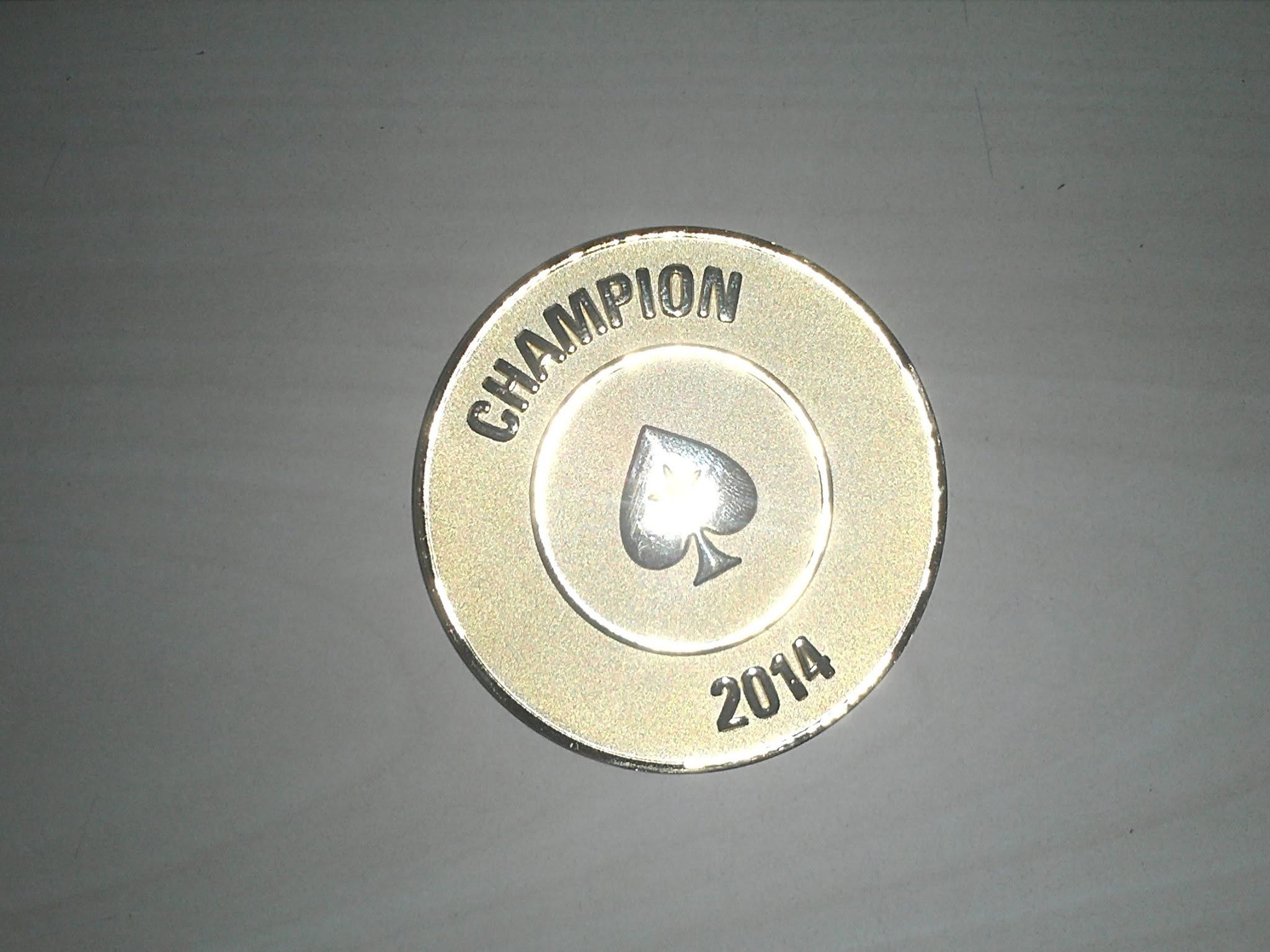
My thinking was simple: if I learned these games well enough, maybe one day I could win a SCOOP or WCOOP title myself. Playing at the WSOP felt completely out of reach at the time, so online championship events represented the dream.
As a result, I started studying mixed games and eventually focused heavily on Single Draw. Years later, I won a COOP title in that variant.
That experience is one reason why I struggle with the argument that mixed games only appeal to a small group of existing enthusiasts. For me, mixed games opened the door to studying poker more seriously and pursuing goals that I might never have considered through Hold’em alone.
Take 2-7 Single Draw as an example.
Many players consider it one of the purest forms of poker. There are no community cards. Players receive five cards, decide how many to draw, and rely heavily on observation, betting patterns, and reading their opponents. Concepts such as snowing add another layer of depth that simply does not exist in many other formats.
It offers a very different poker experience, and that variety is part of what makes the game special.
Then there is the Michael Mizrachi example.
Last year, Mizrachi accomplished one of the most remarkable feats in poker history by winning both the WSOP Main Event and the Poker Players Championship in the same summer. The PPC is widely regarded as the ultimate mixed-game test and one of the most prestigious titles in poker.
Ironically, when GGPoker announced Mizrachi as their ambassador, the company highlighted that he brought “a wealth of mixed game expertise” and more than two decades of high-stakes success to the platform.
Yet the games that helped define his career still cannot be played on GGPoker.
To be clear, I do not believe GGPoker is opposed to mixed games. There are almost certainly business reasons behind the delay. Perhaps the operator wants to ensure there is enough demand. Perhaps it is a development priority issue. Perhaps there are technical considerations that players simply do not see.
But what has become increasingly difficult to understand is how long it has taken. This is not a small operator trying to decide whether niche variants are worth the investment. This is the biggest poker room in the world, backed by the most recognizable brand in poker.
If mixed games are eventually coming, as GGPoker itself says they are, then the question is no longer whether they should arrive. It’s why players are still waiting.